
Analysis: Identifying a perpetrator of the October 7 attack
Using open-source tools and techniques, I located information on a previously unidentified individual who participated in taking children and adults hostage at Kibbutz Be'eri on October 7, 2023.

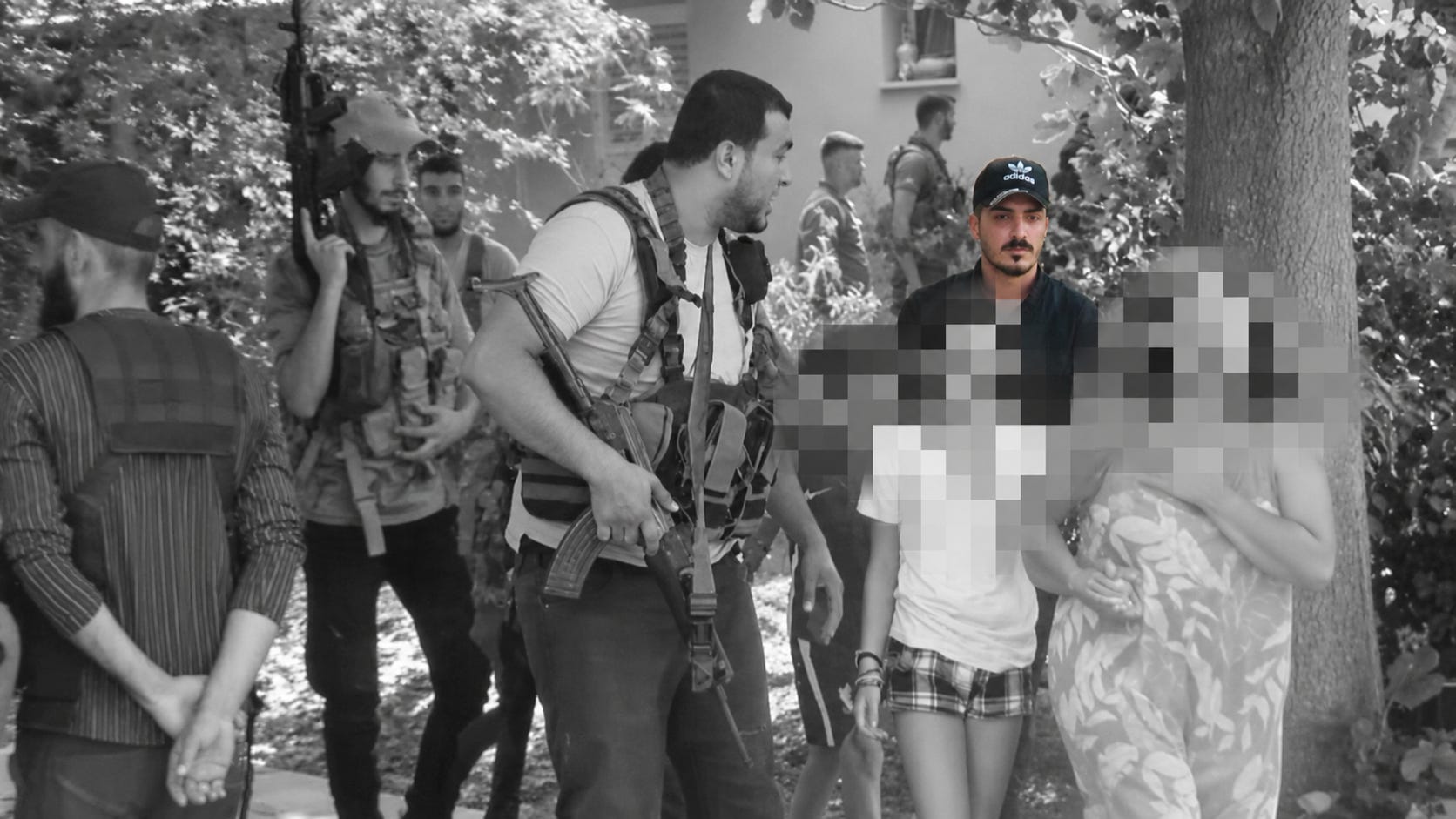
On July 2, Israel observed the one-thousandth day since the Hamas-led attack on the country’s southern communities. Kibbutz Be’eri, situated near the Gaza border, was among the communities severely affected. The Israel Defense Forces (IDF) reported that approximately 340 attackers infiltrated the kibbutz, resulting in the deaths of 102 individuals and the abduction of others. Since that pivotal day, the IDF has undertaken a comprehensive targeted killing campaign against individuals involved in the assault. While many of the attackers have been killed by the IDF, others remain publicly unidentified.
Early last year, I launched a project to identify the perpetrators involved in the events of October 7. Many of the heinous acts committed that day were filmed by the attackers, providing a wealth of visual evidence to aid in identifying as many individuals as possible. While the attackers’ faces are visible in hours of available footage, I realized it was important to publicize their names and backgrounds as well. The world needed to know not only what they looked like, but who they were. The world should know not only what they looked like, but who they were.
This was, after all, one of the worst mass atrocities committed against Jews since the Second World War. I understood the gravity of what happened firsthand, having visited a badly damaged Kibbutz Nir Oz just a few months after October 7. I vividly recall the not-so-distant sounds of IDF artillery and drones, and the scene of destruction and blood, including the foul smell of decomposing organic material.
Kibbutz Be’eri, October 7, 2023
A source sent me footage recorded by a terrorist who was a part of a cell that infiltrated Kibbutz Be’eri on October 7. The video provided excellent visual profiles of the attackers (most were Hamas) who invaded the community. I successfully identified a handful of them in previous investigations, but for today’s newsletter, I will focus on one individual and explain how I found him.
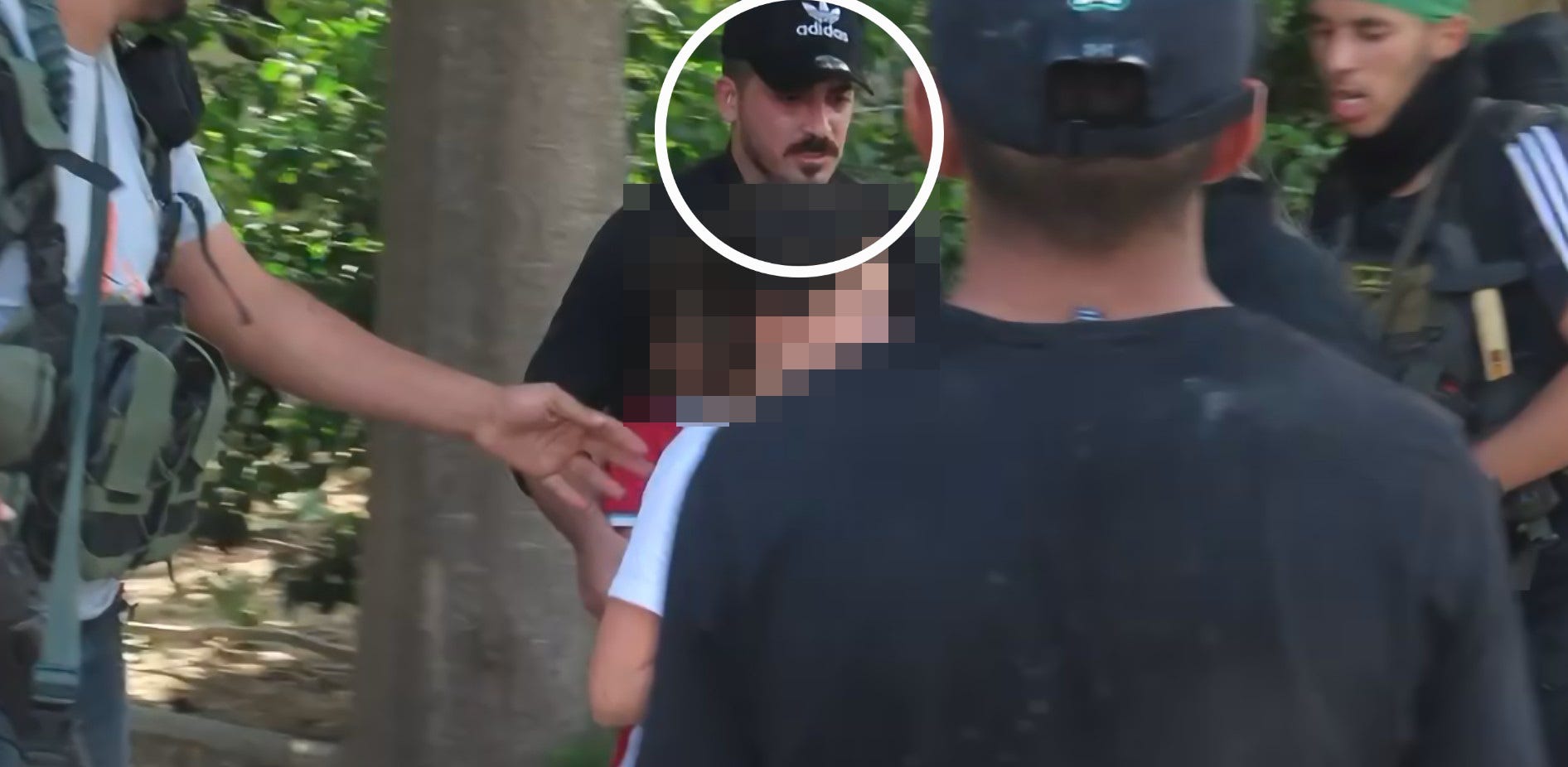
One of the video segments I analyzed showed a group of Hamas members and individuals in civilian clothing who had taken Sharon Avigdori, her 12-year-old daughter Noam, and 8-year-old Naveh Neri hostage. I focused on the individual wearing a black Adidas hat, who was leading Naveh and Noam at the beginning of the footage.
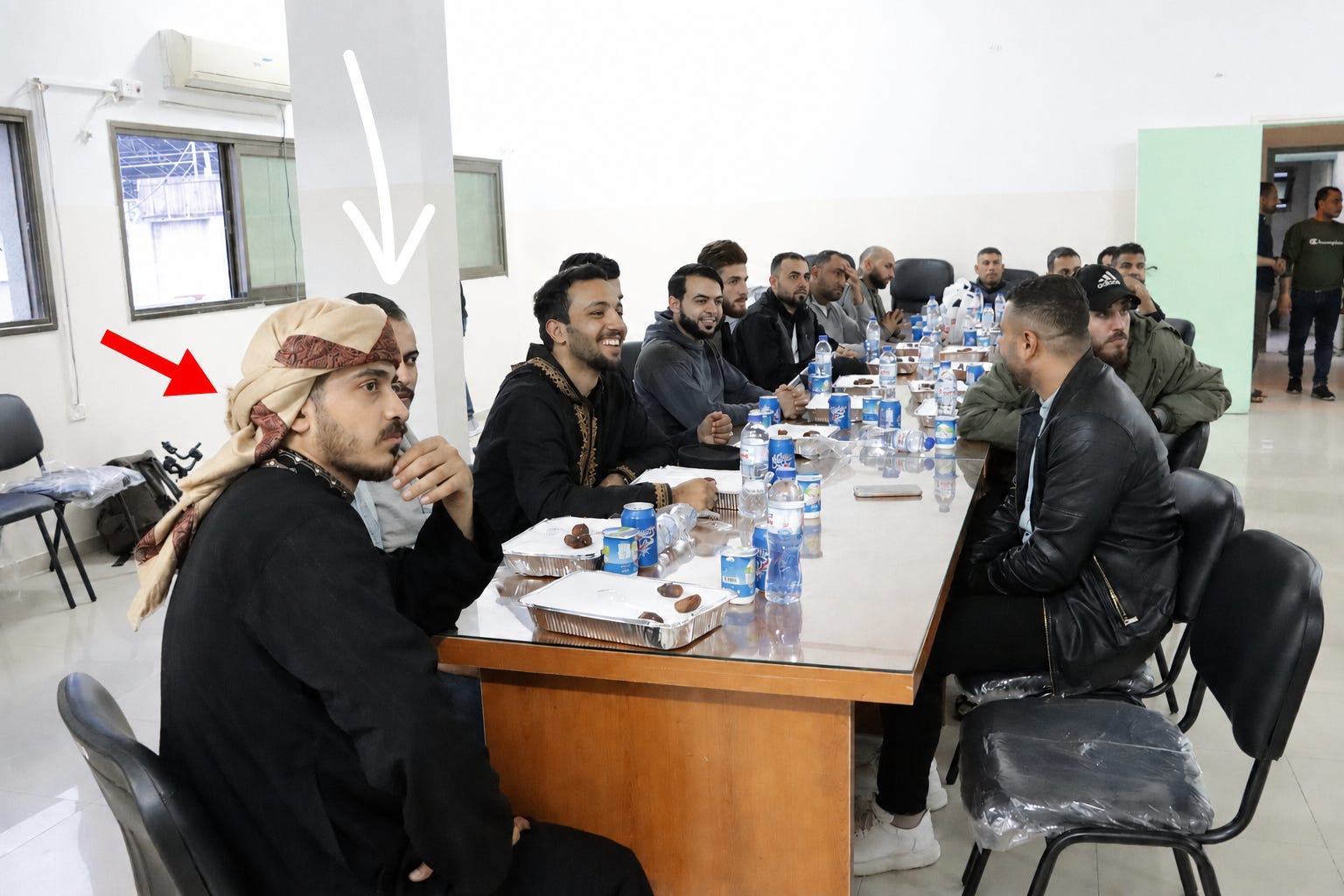
I used PimEyes and Lenso facial recognition software to analyze the individual’s facial features. Both platforms successfully identified multiple photographs of the individual on a website administered by the Nuseirat municipality in Gaza. Notably, these images were already familiar to me, having previously served as evidence I used to identify Yasir Samir, who abducted Raz Ben Ami from Kibbutz Be’eri on October 7.
The discovery of the suspect in photographs alongside Yasir Samir and other individuals I have previously identified in terrorism-related cases represented a positive development. It established a link between the suspect and known terrorists. While the evidence indicated that I was likely on the right track, I had not yet found the detailed information about the suspect that I sought.
Since I was already familiar with some of the individuals in the Nuseirat municipality photograph, I knew that they were in the same circle of friends. I researched their social media accounts and found an Instagram account named Mohammednasser_94 that closely resembled the suspect in the October 7 picture. After investigating the account, I found additional proof I needed: a name and a video of the suspect wearing what appeared to be the Adidas hat in the October 7 photo.
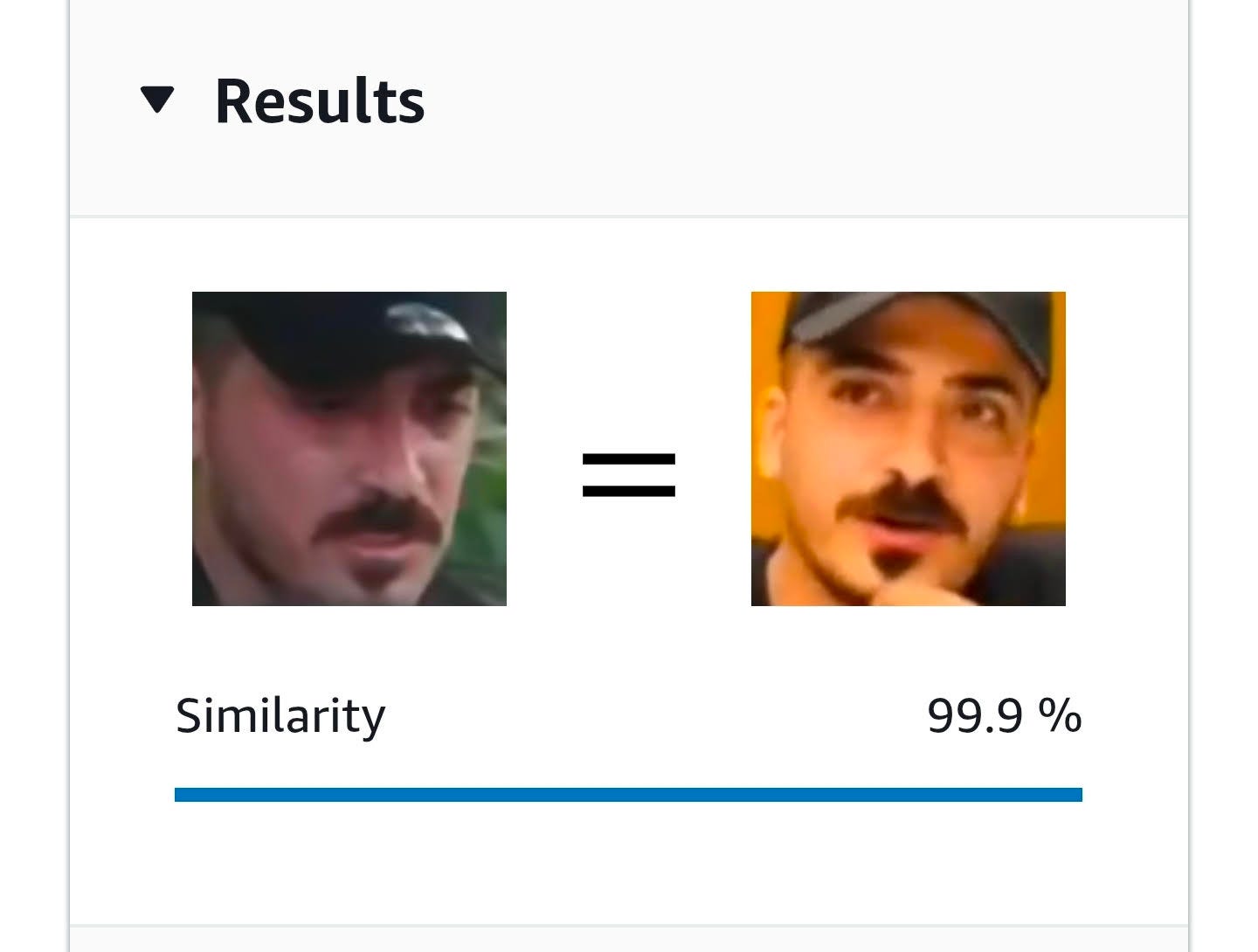
To support my findings, I used Amazon Rekognition Face Comparison software to compare the individual in the October 7 photograph with pictures of Mohammed Nasser from his Instagram account. The software returned a 99.9% similarity, a result that speaks for itself.
Given all the evidence, I assess that it is highly likely the attacker in the October 7 photograph is Mohammed Nasser.
Beyond links to terrorists, I found no explicit evidence that Nasser belonged to Hamas or another terrorist organization. Separately, Nasser maintains multiple active social media accounts and promotes himself as a vocalist, strongly suggesting he returned to Gaza and resumed his life.
There are more publicly unidentified October 7 attackers still at large. I know this from my investigations into some of them. I suspect the IDF will locate them sooner or later, especially given recent developments in Gaza.